
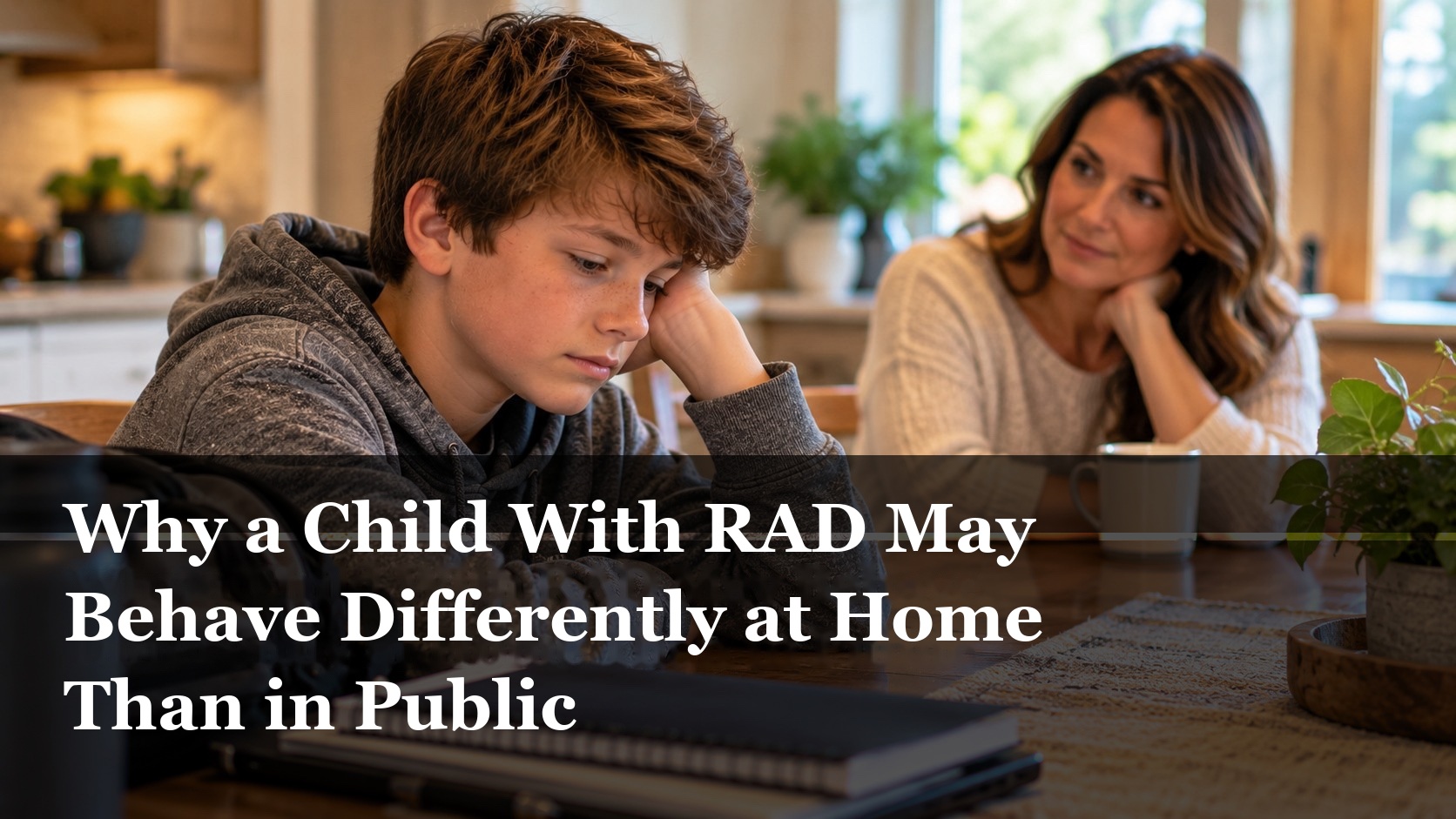
A parent describes a difficult evening at home: arguments over ordinary requests, emotional withdrawal, or an intense reaction to a small disappointment. The next day, a teacher or family friend describes the same child as polite, cooperative, and pleasant.
For parents, the contrast can be bewildering.
Some families raising children with attachment-related difficulties report significant differences between behavior at home and behavior in public. These differences deserve understanding rather than quick assumptions about the child or the parents.
Importantly, behaving differently across settings is not a diagnostic sign of Reactive Attachment Disorder by itself. Many children without RAD show similar patterns, and several different emotional, developmental, and environmental factors may be involved.
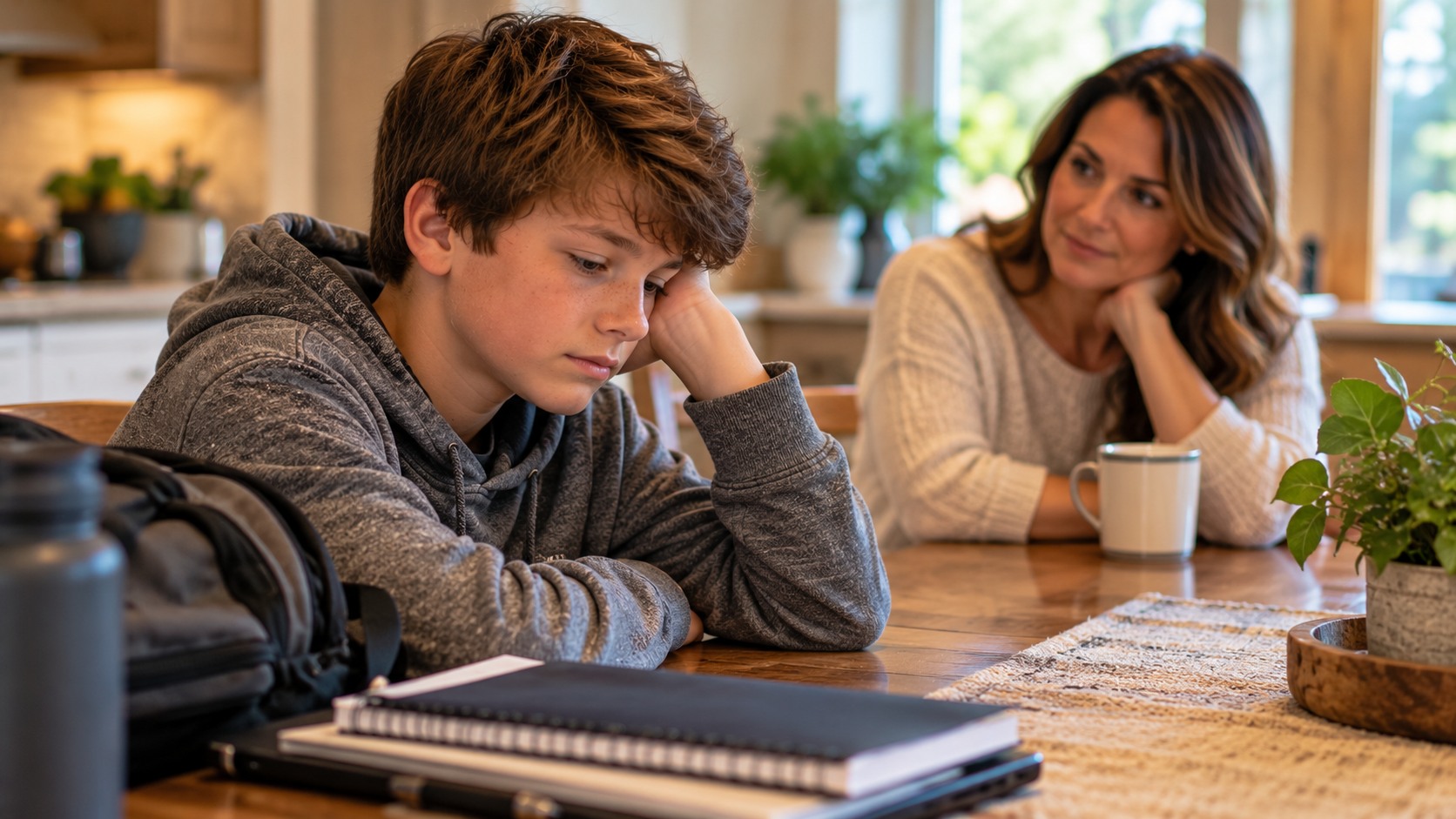
Why a Child May Behave Differently Across Settings
Children respond to their surroundings, relationships, expectations, and energy levels.
A classroom, church activity, or visit with friends may have a predictable beginning and end. The child may know exactly what behavior is expected, and interactions may be brief or relatively uncomplicated.
Home is different. Family life includes transitions, chores, correction, affection, disappointment, and repeated opportunities for emotional closeness. These experiences may feel more demanding to a child who has difficulty trusting caregivers or regulating emotions.
A child might also work hard to meet expectations during the school day and have fewer emotional resources remaining afterward.
These possibilities do not explain every situation, but they illustrate why parents should look beyond the behavior itself.
Understanding Attachment-Related Difficulties
Reactive Attachment Disorder is a specific clinical condition associated with severe disruptions in early caregiving. Children with RAD may have difficulty seeking or responding to comfort from familiar caregivers.
The American Academy of Child and Adolescent Psychiatry's guide to attachment disorders distinguishes RAD from Disinhibited Social Engagement Disorder, a separate condition that can involve unusually familiar behavior with unfamiliar adults.
That distinction matters.
A child who appears outgoing or charming with strangers does not automatically have RAD. Likewise, a child who argues with parents but follows school rules does not necessarily have an attachment disorder.
A comprehensive evaluation is needed to understand whether attachment difficulties, anxiety, trauma-related symptoms, ADHD, learning challenges, family stress, or other factors are contributing.
Different Settings Create Different Demands
Consider how much a child may be asked to manage during an ordinary day.
At school, the schedule may be posted, transitions announced, and expectations reinforced by several adults. A student may feel successful when he knows exactly what comes next.
At home, the same child might encounter a change in dinner plans, an unexpected request, a conversation about homework, or an emotionally meaningful interaction with a parent.
Even small changes can feel overwhelming to a child who struggles with flexibility or emotional regulation.
Other factors, including sleep, hunger, sensory overload, or accumulated stress, may also influence the difference.

Why Parents May Feel Misunderstood
When teachers, relatives, or community members see a child behaving well, they may struggle to understand reports of serious difficulties at home.
Parents can feel isolated when their experiences are questioned or minimized.
The most useful response is not to decide which adult has the correct picture. Both observations may be accurate within their settings.
Parents and professionals can work together to compare patterns, including:
- What happens immediately before a difficult interaction?
- Which situations seem easier or harder for the child?
- Are transitions, correction, affection, or academic demands involved?
- How do sleep, fatigue, and stress affect the behavior?
- What helps the child regain calm?
Written observations can make conversations with teachers and qualified mental health professionals more productive.
What Parents Can Try at Home
Keep routines predictable
A consistent daily rhythm can make expectations easier to understand. Prepare children for transitions when possible and explain changes calmly.
Use clear, manageable directions
A long series of instructions may overwhelm a child who is already distressed. Simple expectations and reasonable choices can support cooperation.
Avoid escalating a power struggle
When emotions rise, prioritize safety and calm communication. Important conversations can often wait until everyone is more regulated.
Build positive interactions outside difficult moments
Shared activities, ordinary conversation, and patient listening help ensure that family relationships are not defined only by correction or conflict.
Seek a professional perspective
The CDC's guidance on children's mental health treatment emphasizes evaluation and individualized support when emotional or behavioral difficulties interfere with daily life.
A clinician can help identify the factors behind the behavior and recommend appropriate family-centered support.
What This Pattern Does Not Mean
Different behavior at home and in public does not prove that a child is deliberately deceiving adults. It does not establish that the parents are doing something wrong. And it does not, on its own, establish RAD.
Parents should be cautious about explanations that reduce every difficult interaction to manipulation or a desire for control.
Children's behavior is complex. Understanding it requires attention to development, relationships, health, and the child's individual history.
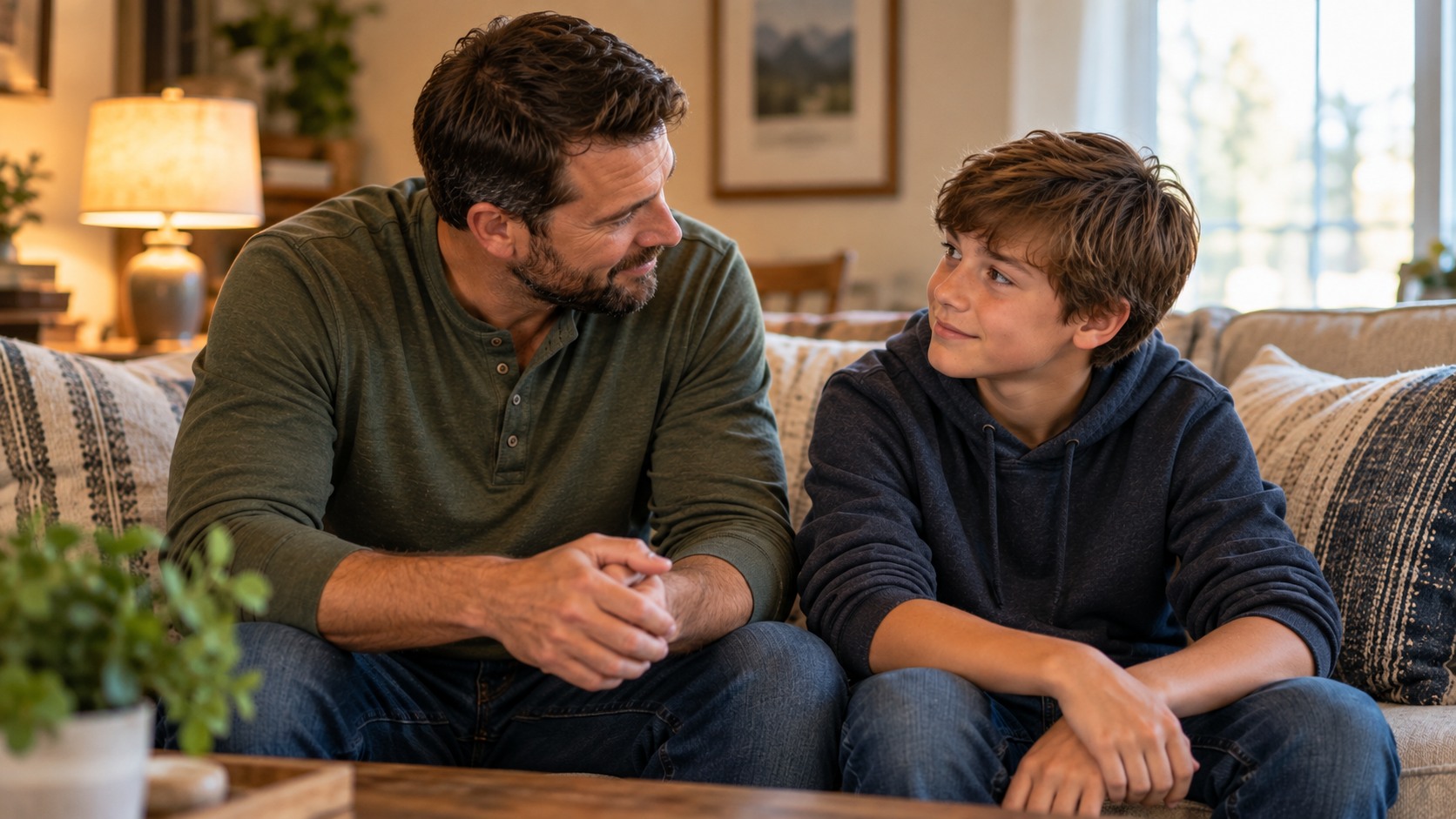
Helping Your Child and Family Move Forward
Some families benefit from additional academic structure, predictable routines, and consistent adult mentoring alongside any needed clinical care.
Raising Arrows Children's Home offers a Christian home and school environment in Montana for boys ages 9–16, emphasizing discipleship, education, personal responsibility, and supportive relationships.
Raising Arrows is not a licensed therapeutic treatment facility, and residential enrollment should not be considered a substitute for appropriate mental health evaluation or treatment.
Parents who want to understand its educational approach, family communication, and admissions process can review the Raising Arrows frequently asked questions.
A More Complete Picture Brings Better Support
A child can struggle at home and still demonstrate real strengths elsewhere. Both parts of the picture matter.
By listening carefully, documenting patterns, collaborating with professionals, and choosing support based on the child's actual needs, families can move away from confusion and toward a more informed plan.
The goal is not simply better behavior in public or at home. It is helping a child develop healthier relationships, emotional skills, and a greater sense of stability over time.