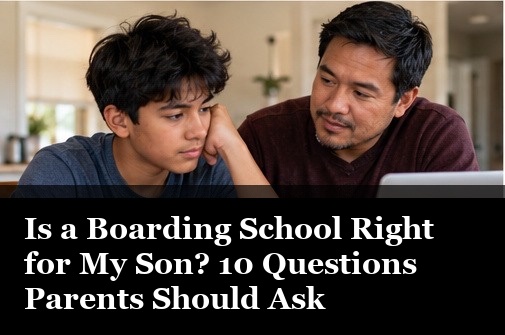
Deciding whether to enroll your son in a boarding school can bring a mixture of hope, uncertainty, and difficult questions.
Perhaps he is falling behind academically. Maybe daily routines have become a struggle, or your family believes he could benefit from consistent mentoring and a more structured environment.
Whatever brings you to this decision, choosing a boarding school should involve more than finding a program with an appealing website.
Parents need to understand how a school operates, what it expects from students, and whether its services match their son's educational, emotional, developmental, and spiritual needs.
These ten questions provide a practical starting point.

1. Is My Son's Safety and Well-Being a Clear Priority?
Safety should be the first consideration.
Ask how the school supervises students, trains staff, handles medical needs, and responds to emergencies. Request information about safeguarding policies, background checks, discipline procedures, and how parents are notified about serious incidents.
A reputable program should be willing to discuss these matters openly and provide appropriate documentation.
If your son has mental health or behavioral safety concerns, ask whether the school is equipped to meet those needs and what happens if additional professional care is required.
2. What Are the Academic Expectations and Support Options?
A boarding school should provide a clear educational plan.
Ask about curriculum, teacher qualifications, class sizes, academic assessment, learning accommodations, and how students receive help when they fall behind.
If your son has an individualized education plan, learning disability, or significant academic gaps, discuss those needs before enrollment.
Also ask how credits, transcripts, and grade placement will be handled if he later transfers to another school.
The U.S. Department of Education's non-public education FAQ can help parents understand questions surrounding private school oversight and accreditation.
3. What Does an Ordinary Day Look Like?
Ask for a realistic description of the daily routine, not just a list of activities.
When do students wake up, study, eat, participate in recreation, complete chores, and prepare for bed?
The American Academy of Pediatrics' guidance on family routines explains why predictable daily patterns can support children and families.
Structure is most helpful when expectations are consistent, age-appropriate, and balanced with healthy opportunities for rest, relationships, and recreation.
4. How Does the School Respond to Behavioral Challenges?
Every child will have difficult moments. Ask what happens when a student refuses an instruction, argues with a peer, becomes overwhelmed, or breaks a rule.
Look for clear, respectful practices that emphasize safety, accountability, skill-building, and appropriate consequences.
Ask whether staff use physical restraint or seclusion, under what circumstances, and what safeguards apply. Request the written policies.
If your son has a diagnosed mental health condition, make sure the program's behavioral approach is compatible with guidance from his qualified care team.
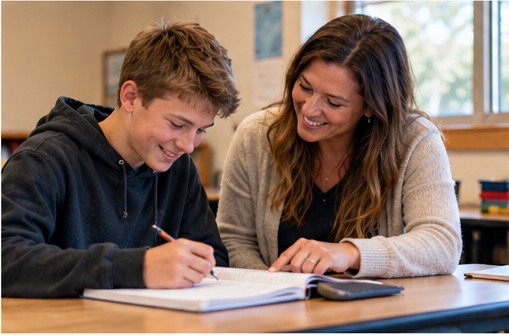
5. How Important Is Faith in Daily School Life?
For families considering a Christian boarding school, faith may be central to the decision.
Ask how Biblical teaching, prayer, worship, and discipleship are incorporated into everyday routines.
Is faith primarily part of classroom instruction, or does it also shape mentoring, conflict resolution, and community expectations?
Understanding the school's religious practices helps parents determine whether the environment aligns with their family's beliefs.
6. Who Will Be Working With My Son?
Staff relationships can shape a child's daily experience.
Ask about staff qualifications, training, supervision, turnover, and student-to-adult ratios. Learn who will help your son academically, who will oversee residential life, and whom he can approach with a concern.
You should also understand how adults communicate with one another when a student needs additional support.
7. How Will We Stay Connected as a Family?
Residential enrollment should not leave parents uncertain about their child's experience.
Ask how often you can speak with your son, what types of updates you will receive, and how visits are arranged.
Discuss expectations for holidays, emergencies, family participation, and decisions about your son's care or education.
The goal is to maintain meaningful family involvement while helping your son adapt to the school's routine.
8. What Is Included in Tuition?
Request a written explanation of tuition, payment schedules, deposits, additional fees, supplies, transportation, and other potential expenses.
Ask whether costs may change during enrollment and what happens if your son leaves early.
Families should understand the financial commitment before making a decision.
9. How Will We Know Whether the Program Is Helping?
Ask what progress looks like.
Will the school track academic achievement, responsibility, communication, daily habits, and other goals? How often will parents receive updates?
A useful program should help families identify realistic expectations and review progress over time.
Be cautious of promises that every child will experience the same results or change within a guaranteed period.
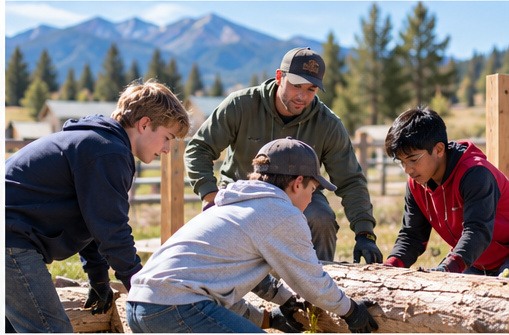
10. Is This the Right Level of Support for My Son?
This may be the most important question.
A boarding school may provide structure, education, mentoring, and a different daily environment. It does not necessarily provide mental health treatment.
If your son has serious psychiatric symptoms, significant safety concerns, or needs ongoing clinical services, consult qualified professionals about the appropriate level of care before enrolling.
Ask the school what needs it can support, what falls outside its capabilities, and how it works with outside professionals when necessary.
Exploring Raising Arrows Children's Home
Raising Arrows Children's Home is a Christ-centered home and boarding school in Montana for boys ages 9–16.
Its approach emphasizes academics, consistent routines, Biblical discipleship, personal responsibility, and supportive adult relationships.
Raising Arrows is not a licensed therapeutic treatment facility. Families should consider its educational and residential services in light of their son's individual needs.
For practical details about enrollment, family communication, daily routines, and academic support, review the Raising Arrows frequently asked questions.
Make the Decision With Clarity
The best boarding school decision is not necessarily the fastest one.
Take time to ask questions, review policies, involve your son appropriately, and consult educational or clinical professionals when needed.
A thoughtful decision considers your son's safety, learning needs, relationships, personality, faith, and long-term goals.
With the right information, your family can make a choice grounded in understanding rather than uncertainty.