
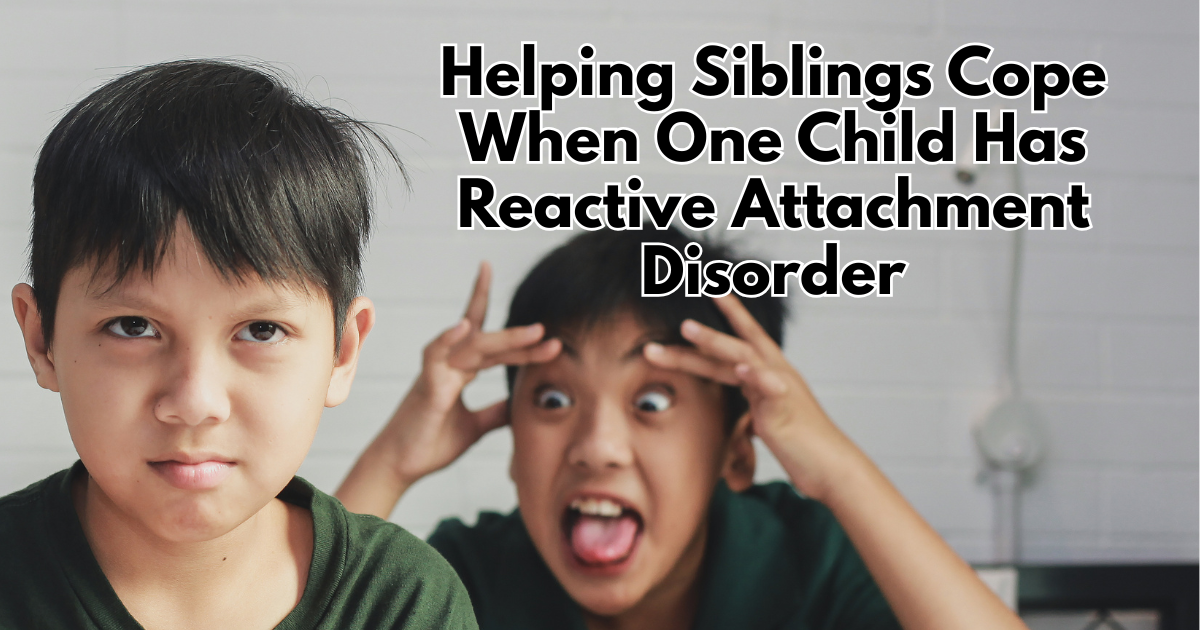
A Guide for Families Navigating the Effects of RAD on Siblings
Parenting a child with Reactive Attachment Disorder, commonly referred to as RAD, can involve intense behavioral challenges, control struggles, emotional exhaustion, and frequent family crises.
Daily life may begin to revolve around managing trauma-related behaviors, preventing escalation, and helping the child regain emotional regulation. In the middle of this demanding journey, however, the needs of the other children in the home can easily receive less attention.
The effects of Reactive Attachment Disorder on siblings can be significant and are often overlooked.
Siblings may sometimes be described as "glass childrenglass children — A term describing siblings in RAD families who are present and visible but overlooked—transparent to caregivers whose attention is consumed by the child in greatest crisis.." They are present and visible, but adults may unintentionally look through them while focusing their attention on the child experiencing the most immediate crisis.
Understanding how RAD affects siblings is an important step toward protecting their wellbeing and helping the entire family begin to heal.
How Does Reactive Attachment Disorder Affect Siblings?
Living with a sibling who has RAD can mean living with uncertainty.
A child affected by early trauma and attachment difficulties may struggle with trust, emotional regulation, healthy relationships, and the need to maintain control. These struggles may appear through behaviors such as:
- Screaming or prolonged emotional outbursts
- Lying or manipulation
- Defiance
- Bullying
- Property damage
- Physical aggression
- Intimidation
- Attempts to divide family members
- Resistance to affection or authority
For siblings, the home can begin to feel unpredictable. They may feel as though they are constantly walking on eggshells, unsure of what could trigger the next conflict or crisis.
Over time, this environment may affect their emotional health, behavior, relationships, and sense of safety.
The Unseen Burden on Siblings of Children With RAD
Siblings may carry emotional burdens that are not immediately visible to parents, teachers, relatives, or family friends.
A quiet or well-behaved sibling is not necessarily unaffected. In some cases, compliance and independence may become coping strategies used to avoid creating additional stress for the family.
Anxiety and Hypervigilance
Children living in an unpredictable home environment may become highly alert to changes in tone, movement, or behavior.
They may constantly monitor:
- The mood of the child with RAD
- Their parents' stress levels
- Signs that an argument is beginning
- Changes in household routines
- Potential triggers for an outburst
- Whether they need to leave the room
This heightened awareness is sometimes called hypervigilancehypervigilance — A state of constant alertness to potential threats or disruptions—experienced by siblings in RAD households who must continually monitor the emotional environment to stay safe..
A sibling may appear mature, responsible, or unusually perceptive. Internally, however, they may be experiencing significant worry or fear.
Feelings of Neglect
A child with RAD may require a disproportionate amount of parental time, energy, supervision, and emotional attention.
As a result, siblings may feel that their own needs are less important.
They may experience situations such as:
- School events being missed because of a family crisis
- Celebrations being disrupted
- Activities being cancelled
- Parents being emotionally unavailable
- Achievements receiving limited recognition
- Their concerns being postponed
- Family decisions revolving around one child's behavior
Even when parents are doing everything they can, siblings may still feel overlooked.
Anger and Resentment
Siblings may deeply love the child with RAD while also feeling angry about how that child's behavior affects the household.
They may resent:
- The amount of attention the child receives
- Different rules or consequences
- Repeated disruptions
- Damage to their belongings
- Cancelled family plans
- The stress placed on their parents
- Feeling responsible for keeping the peace
These emotions can exist alongside compassion and loyalty.
Children should be reassured that feeling angry, frustrated, or resentful does not make them unkind or disloyal.
Manipulation, Bullying, and Victimization
Some children with attachment-related challenges may attempt to control siblings through intimidation, manipulation, blame, threats, or secrecy.
A sibling may be pressured to take responsibility for something they did not do, keep harmful behavior secret, give up possessions, break family rules, support an untrue version of events, accept verbal or physical mistreatment, or avoid telling an adult what happened.
Parents should take reports of bullying or intimidation seriously.
Attachment-related challenges may help explain a child's behavior, but they do not eliminate the need to protect every child in the household.
Premature Maturity
Siblings of children with RAD may take on responsibilities beyond what is appropriate for their age.
They may become caretakers, peacekeepers, protectors, emotional support for a parent, supervisors of younger children, mediators during conflict, or highly independent problem-solvers.
These children are often described as resilient and mature.
However, their maturity may have developed because they felt they could not safely rely on the adults around them during periods of crisis.
Children should not be expected to manage their sibling's behavior or carry adult-level responsibility for family stability.
Emotional Withdrawal and Isolation
Siblings may hesitate to talk about what happens at home.
They may worry that others will not believe them, their family will be judged, their sibling will get in trouble, their parents will feel guilty, they will create another crisis, or friends will not understand.
This can be especially difficult when the child with RAD behaves differently outside the home.
Teachers, neighbors, extended family members, or church communities may see a polite and charming child while siblings experience very different behavior privately.
This contrast can leave siblings feeling confused, isolated, or invalidated.
Signs That a Sibling May Be Struggling
Children do not always communicate distress directly.
Parents may notice changes such as difficulty sleeping, nightmares, frequent stomachaches or headaches, increased irritability, sudden emotional outbursts, withdrawal from family activities, declining school performance, fear of being alone with the sibling, excessive responsibility, perfectionism, people-pleasing, avoidance of home, anxiety when plans change, loss of interest in hobbies, aggressive behavior, or regression to younger behaviors.
These signs do not automatically mean a child has experienced trauma. However, they indicate that the child may need additional attention, support, and a safe opportunity to talk.
How to Help Siblings Cope With Reactive Attachment Disorder
Supporting siblings does not require perfect parenting.
It requires consistent, intentional efforts to help each child feel seen, heard, protected, and valued.
1. See and Hear the "Glass Children"
The most important first step is to recognize that quiet children may also be struggling.
Make a deliberate effort to ask how they are coping.
Schedule Individual Time. Spend regular one-on-one time with each sibling without the child with RAD present. It could include a short walk, driving together, getting a snack, reading before bed, playing a game, or attending one of their activities. The goal is to create a period in which that child is not competing with a crisis for your attention.
Use the H.E.A.R. MethodH.E.A.R. Method — A simple framework for connecting with overlooked siblings: Have time set aside, Empty distractions, Actively listen, and Repeat regularly—building trust through consistent, intentional presence.:
- H — Have time set aside: Create consistent opportunities for connection.
- E — Empty the space of distractions: Put away devices and speak privately.
- A — Actively listen: Allow the child to speak without interrupting or immediately solving the problem.
- R — Repeat regularly: Trust is strengthened through consistent communication, not one isolated conversation.
2. Create Physical and Emotional Safety
Every child deserves to feel safe at home.
Establish a Safe Space. Designate a place where siblings can go when the household becomes overwhelming—a bedroom, a quiet corner, or a trusted neighbor's home. The safe space should not feel like a punishment. It should be presented as a place where the child can feel protected and regain a sense of calm.
Develop a Family Safety PlanFamily Safety Plan — A pre-established, practiced plan identifying each family member's role during a RAD crisis—including where siblings go, who manages the child in distress, and when to seek outside help.. Create a clear plan for what each family member should do during a crisis: which adult will manage the child in crisis, where siblings should go, how they can contact a trusted adult, and what to do if physical aggression occurs. Practice the plan during calm periods.
Protect Personal Belongings. Siblings may feel violated when their possessions are repeatedly taken or damaged. Practical protections may include lockable storage, separate bedrooms when possible, and clear household boundaries.
3. Validate Their Feelings
Siblings may experience many emotions at once—love, fear, embarrassment, anger, and relief when the sibling is away from home. These feelings should be acknowledged without judgment.
Avoid immediately defending the child with RAD or explaining away harmful behavior. Statements such as "You know they cannot help it" may unintentionally make the sibling feel that their pain is unimportant.
A better response: "I understand that trauma affects your sibling's behavior, but what happened to you was still upsetting and not acceptable."
4. Avoid Making Siblings Responsible for the Child With RAD
Siblings should not be expected to regulate, supervise, or parent the child with RAD. Age-appropriate household responsibilities are healthy. Carrying responsibility for another child's emotional stability is not.
5. Maintain Normal Family Experiences
Whenever possible, preserve ordinary experiences for the other children—continuing sports and hobbies, attending school activities, celebrating birthdays, visiting friends, and maintaining predictable routines.
Not every activity must include every child. It may be healthy for siblings to participate in safe, enjoyable experiences without the child with RAD present.
6. Communicate Honestly in an Age-Appropriate Way
Explain RAD in language appropriate for the child's age:
"Your sibling experienced things early in life that made it difficult to trust adults and feel safe. Sometimes that fear comes out through controlling, angry, or hurtful behavior. It is not your job to fix it, and you still deserve to be safe."
7. Consider Professional Support for Siblings
The child with RAD may not be the only family member who needs therapeutic support. Siblings may benefit from speaking with a licensed mental health professional who understands childhood trauma, attachment disorders, anxiety, sibling aggression, and adoption or foster care dynamics.
8. Seek Support for the Entire Family
Parents cannot consistently support every child while operating in a state of extreme exhaustion. Allow trusted adults to spend individual time with siblings. A grandparent, family friend, mentor, or church leader may provide a valuable sense of normalcy and connection.
When the Home Environment Becomes Unsustainable
Some families reach a point where the level of aggression, manipulation, or emotional instability in the home becomes unsafe or unsustainable.
In these circumstances, a structured therapeutic environment outside the family home may be considered. This gives parents and siblings the opportunity to step out of constant crisis management and begin addressing their own emotional needs.
Hope and Healing at Raising Arrows Children's Home
At Raising Arrows Children's Home, we provide a safe, structured, Christ-centered environment for boys ages 9 to 16 who are struggling with the effects of early trauma, attachment difficulties, and Reactive Attachment Disorder.
We understand that RAD affects more than one child. Providing a dedicated healing environment for a son with RAD may also create space for the rest of the family to recover.
Your other children need support too. They need to know their experiences are real, their emotions are valid, their safety is important, they are not responsible for their sibling's behavior, and that healing is possible.
Contact Raising Arrows Children's Home to learn more about the program, discuss your family's situation, and explore whether our environment may be an appropriate next step for your son and your family.