
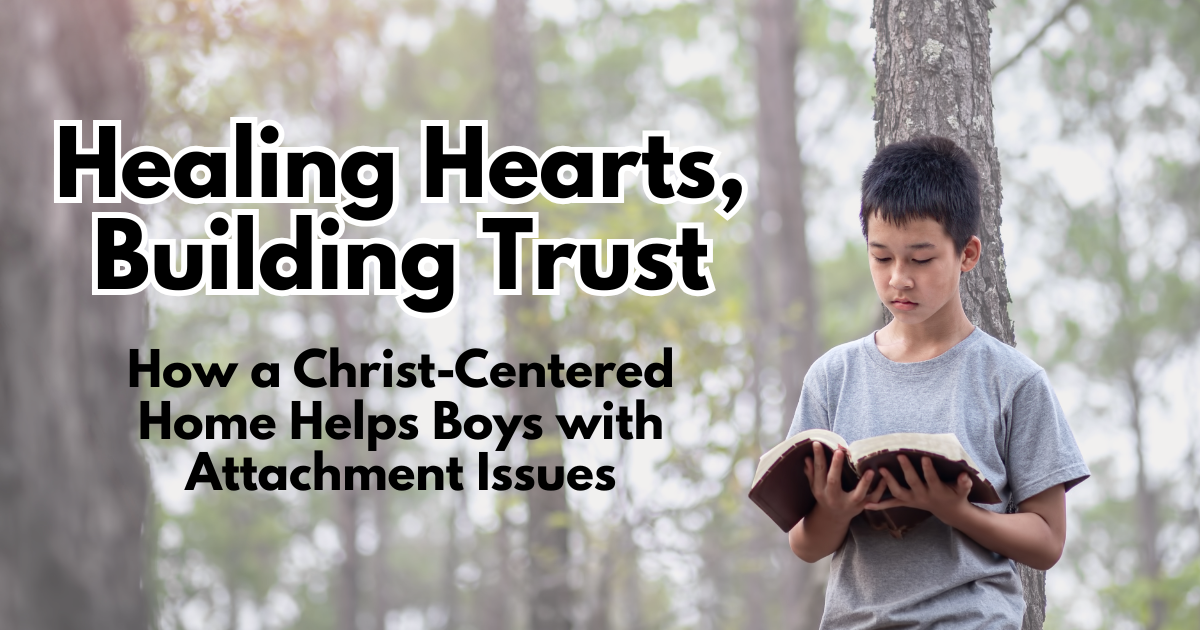
For a young boy, the world is meant to be a safe place anchored by the loving, consistent presence of a parent. But when that foundation is shaken—by trauma, loss, neglect, or family disruption—it can create deep wounds. One of the most significant challenges a child can face is difficulty forming secure, healthy emotional bonds, often known as attachment issuesattachment issues — Difficulties forming secure emotional bonds with caregivers, typically resulting from early experiences of trauma, neglect, inconsistency, or loss—affecting how a child trusts, connects, and sees himself..
These issues don't just make a child shy or a little withdrawn. They can profoundly impact how a boy sees himself, relates to others, and navigates the world. He may struggle with trust, become overly independent to avoid getting hurt, or act out to test if anyone will stay. At Raising Arrows Children's Home in Montana, we witness the pain behind these behaviors every day. But we also witness something far more powerful: the healing that is possible when a boy finds himself in a safe, structured, and relentlessly loving environment rooted in the truth of God's design for family and identity.
Understanding the Roots of Attachment Wounds
Attachment is the deep and enduring emotional bond that connects one person to another across time and space. For a child, the primary attachment to a caregiver is their blueprint for all future relationships. When that caregiver is responsive and nurturing, a child learns, "I am safe, I am loved, and my needs matter." This becomes the foundation for healthy self-esteem, empathy, and trust.
However, a boy who has experienced instability—perhaps moving between homes, enduring the pain of divorce, or facing emotional or physical absence—often learns the opposite. He learns the world is unpredictable, adults cannot be relied upon, and he must only depend on himself. This survival mechanism, while protective in a chaotic environment, becomes maladaptivemaladaptive — A behavior or coping strategy that was once protective in a difficult environment but now hinders healthy functioning in safe relationships—common in children who survived early instability.. It manifests as what we often see in pre-teens and teens: defiance, control issues, difficulty showing affection, anger, or a seeming inability to connect.
These aren't simply "bad behaviors" to be punished away. They are symptoms of a heart that is protecting itself from further hurt. At Raising Arrows, we understand that a boy struggling with attachment issuesattachment issues — Difficulties forming secure emotional bonds with caregivers, typically resulting from early experiences of trauma, neglect, inconsistency, or loss—affecting how a child trusts, connects, and sees himself. isn't rejecting love; he is terrified of what happens when love inevitably leaves. This is why a program focused solely on behavior modificationbehavior modification — A therapeutic approach that focuses on changing observable behaviors through rewards and consequences—helpful for some issues but insufficient alone for children with deep attachment wounds. will always fall short. The heart of the matter is a matter of the heart.
The Raising Arrows Difference: Creating a Secure Base for Healing
Our ministry was opened in 2018 specifically for boys ages 9-16 who needed a safe, loving, and Christ-centered environment to heal and grow. For a boy with attachment issuesattachment issues — Difficulties forming secure emotional bonds with caregivers, typically resulting from early experiences of trauma, neglect, inconsistency, or loss—affecting how a child trusts, connects, and sees himself., environment is everything. He needs a place that is predictable and consistent enough to slowly dismantle his walls of self-protection.
Here is how the daily life and mission of Raising Arrows directly address these deep-seated needs:
Consistent, Nurturing Presence:
The most powerful antidote to an attachment wound is a consistent, caring adult who simply will not leave. Our staff are more than just instructors; they are mentors who invest daily through encouragement, prayer, and authentic mentoring. They are there for chores, for schoolwork, for meals, and for the difficult moments. This steady presence, day after day, begins to rewrite the boy's internal story. He starts to see that not every adult is temporary. He experiences the unconditional love described in Jeremiah 29:11—a plan for a hope and a future, not for harm.
Structured, Predictable Routines:
Boys with attachment issuesattachment issues — Difficulties forming secure emotional bonds with caregivers, typically resulting from early experiences of trauma, neglect, inconsistency, or loss—affecting how a child trusts, connects, and sees himself. often feel a deep need to control their environment because their internal world feels chaotic. The structured home life at Raising Arrows, with its balance of discipline, academics, chores, and exercise, creates a sense of order and safety. When a boy knows what to expect, his brain can shift out of constant "survival mode" and begin to relax, making him more open to connection.
A Positive Peer Culture:
Attachment wounds don't just affect relationships with adults; they deeply impact peer relationships. Boys may struggle to make friends, misread social cues, or be overly competitive. Our focus on group activities—from the 3-day hiking retreat and swimming in nearby lakes to participating in our Choir Teams—is about more than just having fun. It's about creating shared positive experiences in a supervised setting. Learning to work as a team on a hike or rehearse together for a performance builds trust, cooperation, and a sense of belonging. They learn they are part of a community, a vital aspect of God's design.
Finding Identity in Christ:
Perhaps the deepest wound for a boy with attachment issuesattachment issues — Difficulties forming secure emotional bonds with caregivers, typically resulting from early experiences of trauma, neglect, inconsistency, or loss—affecting how a child trusts, connects, and sees himself. is a fractured sense of self. If his primary caregivers failed him, he may internalize that failure as his own fault—believing he is unlovable or unwanted. The core of our ministry is guiding each boy toward a healthy, Christ-centered identityChrist-centered identity — A foundational understanding of one's worth, purpose, and belonging rooted in God's unconditional love and design—the ultimate secure attachment that no human failure can break.. Through Biblical teaching and daily devotionals, they learn a profound truth: their worth is not determined by the failures of fallen humans, but by a Heavenly Father who created them with purpose and loves them unconditionally. This is the ultimate secure attachment—one that can never be broken.
The Journey from Surviving to Thriving
Healing from attachment issuesattachment issues — Difficulties forming secure emotional bonds with caregivers, typically resulting from early experiences of trauma, neglect, inconsistency, or loss—affecting how a child trusts, connects, and sees himself. is not a quick fix. It is a journey. It takes time for a guarded heart to learn to trust again. The typical stay for a student at Raising Arrows is 12 to 18 months, because real, lasting change happens in the context of relationship over time.
We have seen boys arrive angry and withdrawn slowly transform. They start making eye contact. They accept a comforting word. They begin to laugh freely. They start to see themselves not as a problem to be managed, but as an arrow being shaped and sharpened for a purpose (Psalm 127:4). As one parent shared, "They truly care for every single boy who enters that ministry. They only want to see them heal and be successful in life."
If you are the parent of a young man between the ages of 9 and 16, and you see him struggling with trust, connection, and deep-seated pain, know that there is hope. At Raising Arrows, we provide the consistent, loving, and Christ-centered home he needs to put down his armor, begin to heal his heart, and build the healthy attachments he was always meant to have. Where change begins is often where a child finally feels safe enough to let love in.