
You discover snack wrappers tucked beneath your son's mattress, even though food is always available in your home.
Or perhaps he becomes anxious when dinner is late, eats quickly, guards his plate, or repeatedly asks what the family will have for the next meal.
These behaviors can be confusing for parents who are working hard to provide a stable, loving home.
When a child has experienced neglect, food insecurity, or unpredictable access to meals, his relationship with food may continue to reflect earlier experiences even after his circumstances have changed.
Food may represent more than hunger. For some children, it can become connected to safety, predictability, control, and the fear that an important need might not be met.
Understanding those possibilities can help caregivers respond without shame while also supporting healthy eating habits and appropriate boundaries.
Not every food-related behavior is caused by trauma. Medical conditions, growth, medications, sensory preferences, eating disorders, and ordinary developmental changes can also affect appetite and eating patterns.
The most helpful approach begins with curiosity, consistency, and attention to the individual child's needs.
Why Might a Child Hide or Hoard Food?
Imagine growing up without knowing whether dinner will be available.
Even after moving into a home where meals are dependable, a child may continue preparing for the possibility of going without.
He might save crackers in a drawer, tuck snacks into his backpack, or become distressed when food is thrown away.
These behaviors may have developed as ways of coping with scarcity or uncertainty.
The Child Welfare Information Gateway's resource on parenting adopted school-age children notes that some children who have experienced traumatic events may continue behaviors such as food hoarding after they enter a stable home.
This does not mean every child with a history of neglect will hoard food—or that food hoarding always indicates past neglect.
The behavior is one clue that deserves thoughtful attention.
Food Can Become a Symbol of Security
For some children, having food nearby may feel reassuring.
A snack hidden in a backpack may represent a backup plan.
A child who asks repeatedly about dinner may be seeking confirmation that the meal will happen.
Adults may know that food is available. The child may need many consistent experiences before that availability feels dependable.
Shame Can Make Food Hiding More Secretive
If a child is embarrassed, punished harshly, or publicly confronted about hidden food, he may become more secretive.
A calmer response focuses on safety and reassurance.
For example:
"I found some crackers in your room. I want you to know you will have food here. Let's find a place where you can keep a snack safely."
Parents should still address food safety, cleanliness, pests, and household rules.
The goal is to create a workable alternative rather than treating the child as though he has done something shameful by worrying about food.
Why Do Some Children Eat Quickly, Overeat, or Guard Their Plates?
A child who previously experienced food scarcity may feel pressure to eat while food is available.
Other children may become upset when someone reaches toward their plate or when a sibling takes the last serving.
Possible explanations include fear of not getting enough, uncertainty about when food will be available again, sensory discomfort, or difficulty recognizing hunger and fullness.
But these patterns can also have medical or developmental causes.
Caregivers should avoid assuming that rapid eating or an unusually large appetite automatically reflects trauma.
The American Academy of Pediatrics' guidance on parenting children after trauma explains that children who have experienced neglect may worry about whether basic needs—including food and safety—will be met.
That perspective can help parents respond with reassurance while monitoring the child's overall health.
Create Predictable Meals and Snacks
One of the most practical ways to build security around food is to make access more predictable.
Children benefit from knowing that meals and snacks are part of a dependable daily routine.
Depending on age and individual needs, families might establish:
- Consistent times for breakfast, lunch, dinner, and snacks.
- A simple explanation of what happens if a meal is delayed.
- An agreed-upon place for accessible snacks.
- Regular opportunities to drink water.
- Calm, supervised meals without pressure or ridicule.
- A clear way for a child to say he is still hungry.
The exact schedule should fit the child's health, age, activities, and family circumstances.
The goal is not to impose rigid rules. It is to reduce uncertainty.
Explain What Happens Between Meals
A boy who worries about food may benefit from knowing what is available if he becomes hungry before dinner.
Instead of saying only, "Wait until dinner," explain the routine.
"Dinner is at six. If you're hungry before then, you can have something from the snack basket."
Then follow through consistently.
Make Food Access Respectful
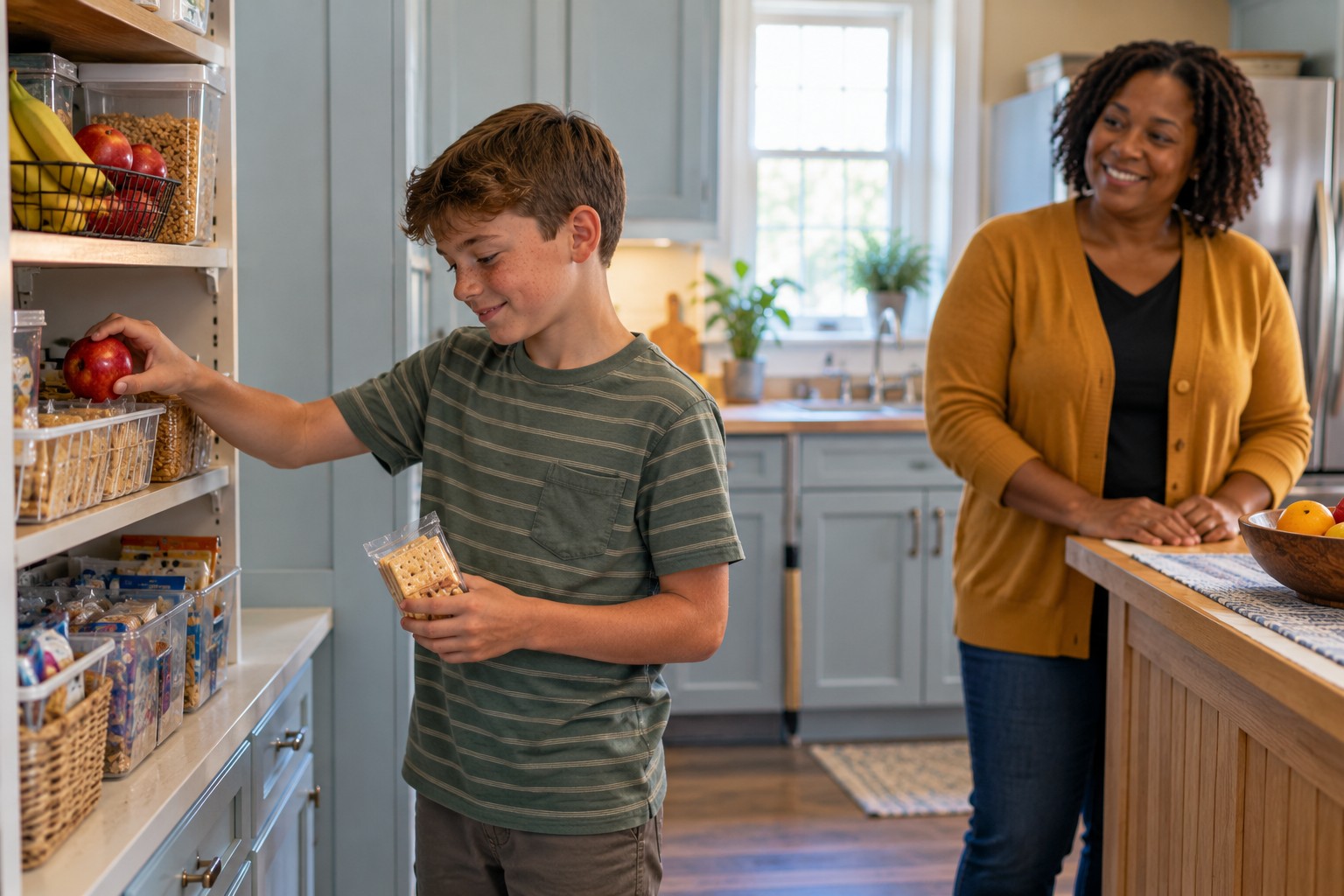
If a child needs reassurance that he will have enough food, consider a designated snack area or another practical arrangement.
Any food kept in a bedroom or backpack should be discussed in terms of safety and cleanliness rather than shame.
For some families, a small shelf or labeled container in the kitchen may offer a better solution than secret food storage.
Give Children Appropriate Choices Around Food
Children who have experienced instability may appreciate opportunities to participate in ordinary food decisions.
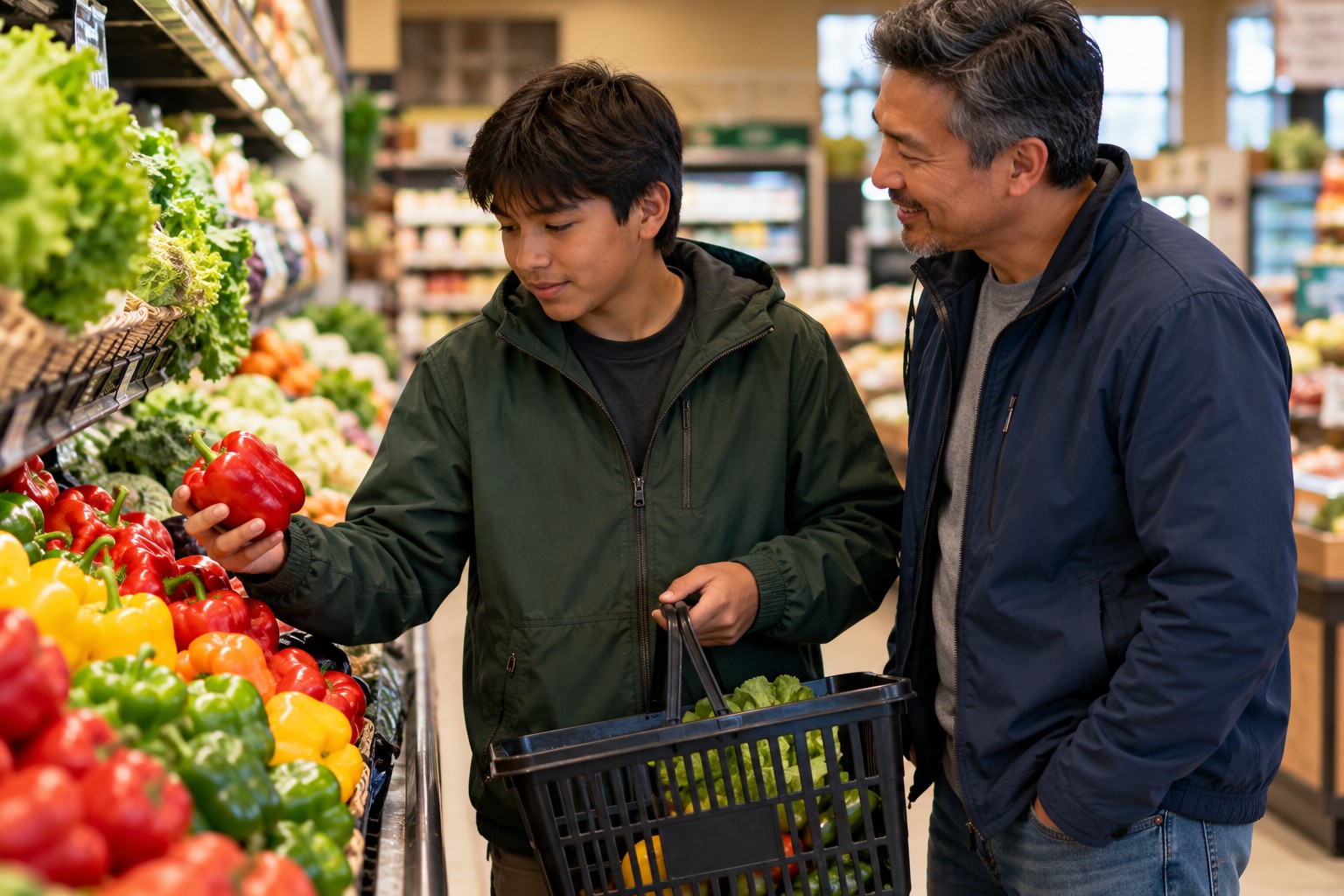
That might include choosing between two snacks, helping create a grocery list, selecting vegetables for a meal, or deciding how to organize a snack basket.
Choices should be age-appropriate and should not place responsibility for food security on the child.
For example, a boy should not feel that the family will run out of food if he forgets to add something to the shopping list.
The adult remains responsible for providing adequate nutrition and dependable access.
The child's participation is an opportunity to practice independence and build trust.
Avoid Turning Mealtimes Into Power Struggles
Meals are an important part of family life, but they can become stressful when every bite turns into an argument.
Avoid using food as a punishment, threatening to withhold meals, or requiring a child to earn access to basic nutrition.
Likewise, be cautious about using food as the main reward for good behavior.
Caregivers can establish reasonable table manners and expectations without making a child feel that eating depends on pleasing adults.
When a child is anxious, a quiet and predictable meal may be more helpful than a lengthy conversation about why he should feel safe.
Don't Force Gratitude
A parent may understandably feel hurt when a child complains about food despite having reliable meals.
However, statements such as "You should be grateful because other children have nothing" are unlikely to resolve underlying anxiety.
Gratitude can be modeled and encouraged over time, but it should not become a test the child must pass before his needs are respected.
What If Your Child Continues Hiding Food?
If food hiding persists, consider keeping a simple record of when it happens and what else is occurring.
Look for patterns without turning the child into the subject of constant surveillance.
Questions worth considering include:
- Does hiding increase before trips or schedule changes?
- Is the child getting enough to eat during the day?
- Does the behavior happen after arguments or stressful events?
- Are there particular foods he worries about losing?
- Does he seem physically hungry, anxious, or both?
- Are there concerns about weight changes, digestion, or eating patterns?
Share significant observations with a pediatrician or qualified professional.
Food-related behaviors should be evaluated in context, especially when a child has experienced neglect, medical problems, or significant developmental disruptions.
When Is Professional Evaluation Important?
Seek medical guidance when food-related behavior is persistent, distressing, or affecting health and daily functioning.
Concerns that warrant evaluation include significant or unexpected weight changes, frequent vomiting, choking or swallowing problems, eating nonfood substances, suspected nutritional deficiencies, severe food restriction, or repeated episodes of eating that feel out of control.
A pediatrician can assess medical and nutritional needs and determine whether a registered dietitian, feeding specialist, or qualified mental health professional may be helpful.
The CDC's information on food insecurity describes how uncertain access to adequate food is associated with poorer health outcomes among children.
For a child with a history of food scarcity, ensuring adequate nutrition and addressing any current access problems should come before focusing solely on behavior.
Parents should not attempt to diagnose an eating disorder or trauma-related condition based on food hiding alone.
How Shared Meals Can Support Connection and Routine
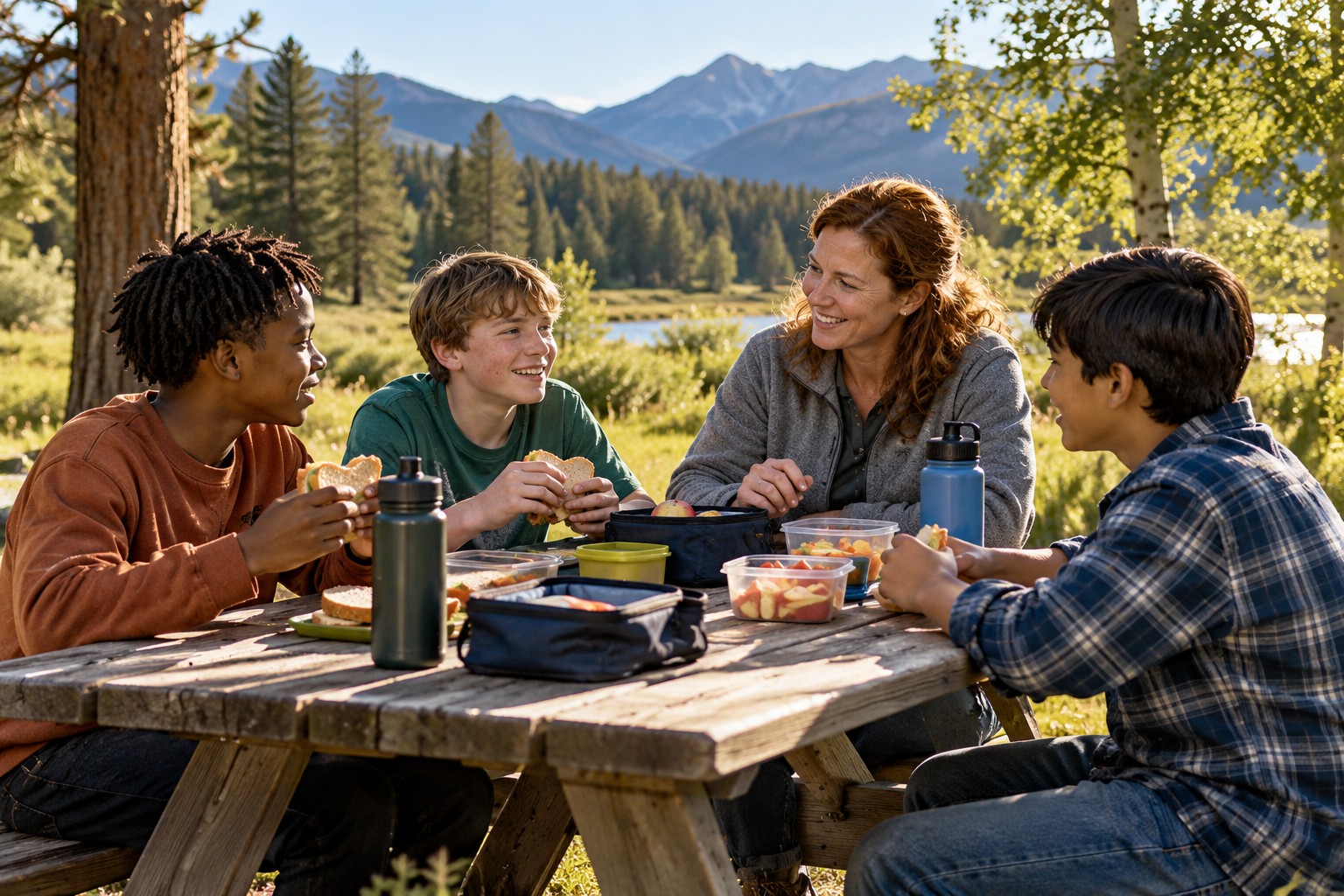
When mealtimes are predictable and respectful, they can offer opportunities for connection.
A family dinner does not have to be elaborate.
Sitting together, sharing a simple meal, and maintaining familiar routines can help children experience everyday stability.
For some boys, preparing food alongside an adult may also build practical skills.
Measuring ingredients, setting the table, helping with cleanup, and learning basic kitchen safety can create opportunities to contribute without turning food into a reward or punishment.
These experiences should be supportive rather than forced.
A child who finds group meals stressful may need a gradual approach, quieter seating, or individualized accommodations.
A Family-Style Environment at Raising Arrows Children's Home
Raising Arrows Children's Home is a Christ-centered boarding school and children's home in Montana serving boys ages 9–16.
Its program overview describes a family-style residential setting built around Christian mentorship, structured daily living, education, and personal responsibility.
The program also discusses practical life skills, including cooking and household responsibilities, on its School for Adopted Boys page.
These elements may be relevant to parents looking for a consistent, supportive environment where boys can develop everyday habits and relationships.
However, Raising Arrows is not a licensed clinical or therapeutic treatment facility.
Families whose sons have significant nutritional concerns, eating disorders, medical needs, or complex trauma-related symptoms should work with qualified professionals and discuss the child's individual requirements with the program before considering enrollment.
Parents can review Raising Arrows' admissions information to learn more about the school and ask whether it can appropriately meet their son's needs.
Building Security Around Food Takes Consistency
When a child hides food, guards his plate, or worries about meals, it can be tempting to focus entirely on stopping the behavior.
But lasting improvement may require understanding the worry behind it, making food reliably available, and addressing any medical or emotional needs.
Start with predictable meals and snacks. Offer appropriate choices. Set reasonable safety rules. Avoid shame. Seek professional guidance when concerns persist or affect health.
Most importantly, remember that trust grows through repeated experiences.
A child who has known uncertainty may need time and dependable care to learn that food, support, and important relationships can remain available tomorrow—not just today.