
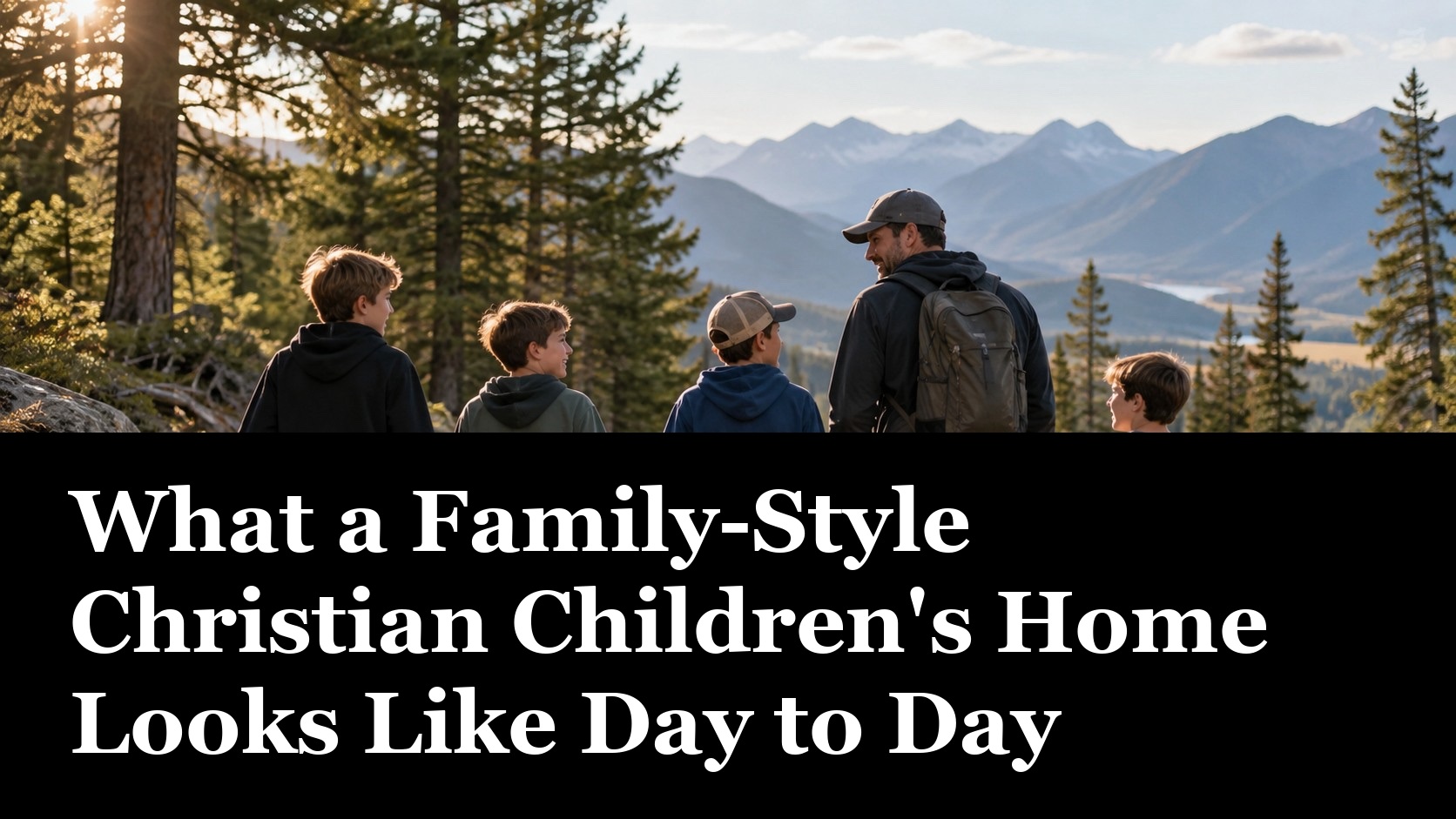
When parents consider a residential school or children's home for their son, one of their biggest questions is often surprisingly simple:
What will his everyday life actually look like?
Families want to know where their son will spend his time, who will guide him, how schoolwork is handled, and whether he will have opportunities to build healthy relationships.
A family-style Christian children's home aims to bring together several important parts of growing up: a consistent home environment, education, responsibilities, supportive adults, recreation, and faith.
At Raising Arrows Children's Home in Montana, those elements are part of a structured, Christ-centered approach to helping boys develop academically, personally, and spiritually.
While individual schedules and activities can vary, the following offers a realistic picture of the program's general daily approach.

Mornings: Predictable Rhythms and Shared Responsibilities
In a family-style home, the day begins with expectations that help everyone participate in community life.
Morning routines may involve getting ready for the day, personal hygiene, organizing belongings, breakfast, and preparing for academic activities.
The purpose is not simply to maintain a schedule. It is to help boys practice habits that support independence and responsibility.
The American Academy of Pediatrics' guidance on family routines explains how consistent daily patterns can help children know what to expect while still allowing appropriate flexibility.
For boys who have struggled with inconsistent habits or repeated conflict over everyday tasks, predictable routines can provide opportunities to practice new skills.
Learning Time: Academic Support at an Individual Pace
Education is an important part of life at Raising Arrows.
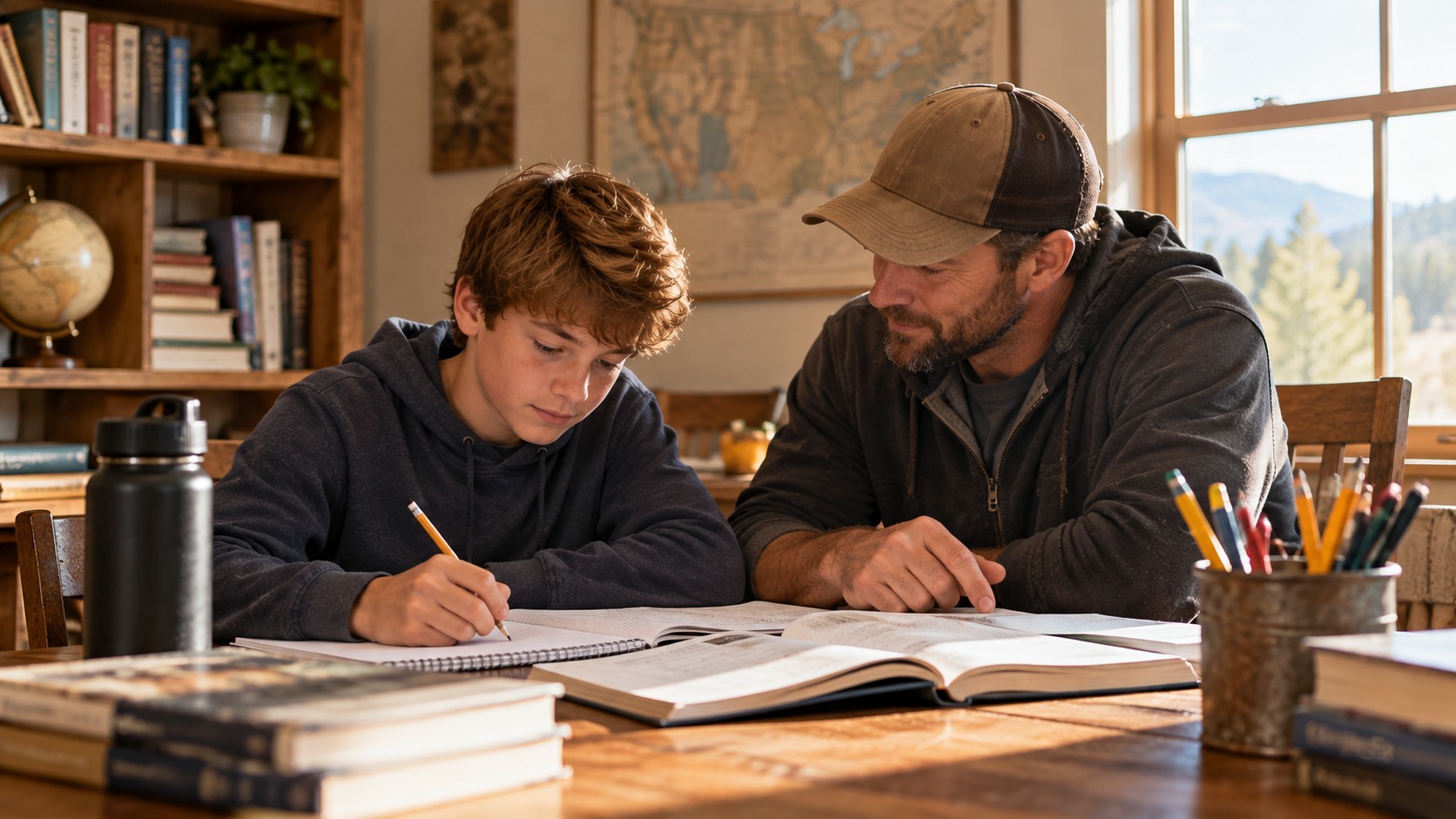
The program describes on-site academics designed to meet students at their learning levels, with staff support and opportunities for individualized attention.
For a boy who has fallen behind in school, progress may begin with rebuilding confidence.
That could involve working through challenging material at a manageable pace, practicing study habits, asking questions, and learning to complete assignments consistently.
Academic success is not only about grades. It also involves persistence, organization, curiosity, and the ability to approach challenges without giving up.
Parents considering enrollment should ask how curriculum, academic records, grade placement, and learning needs are handled for their individual son.
Responsibilities and Practical Skills: Learning by Doing
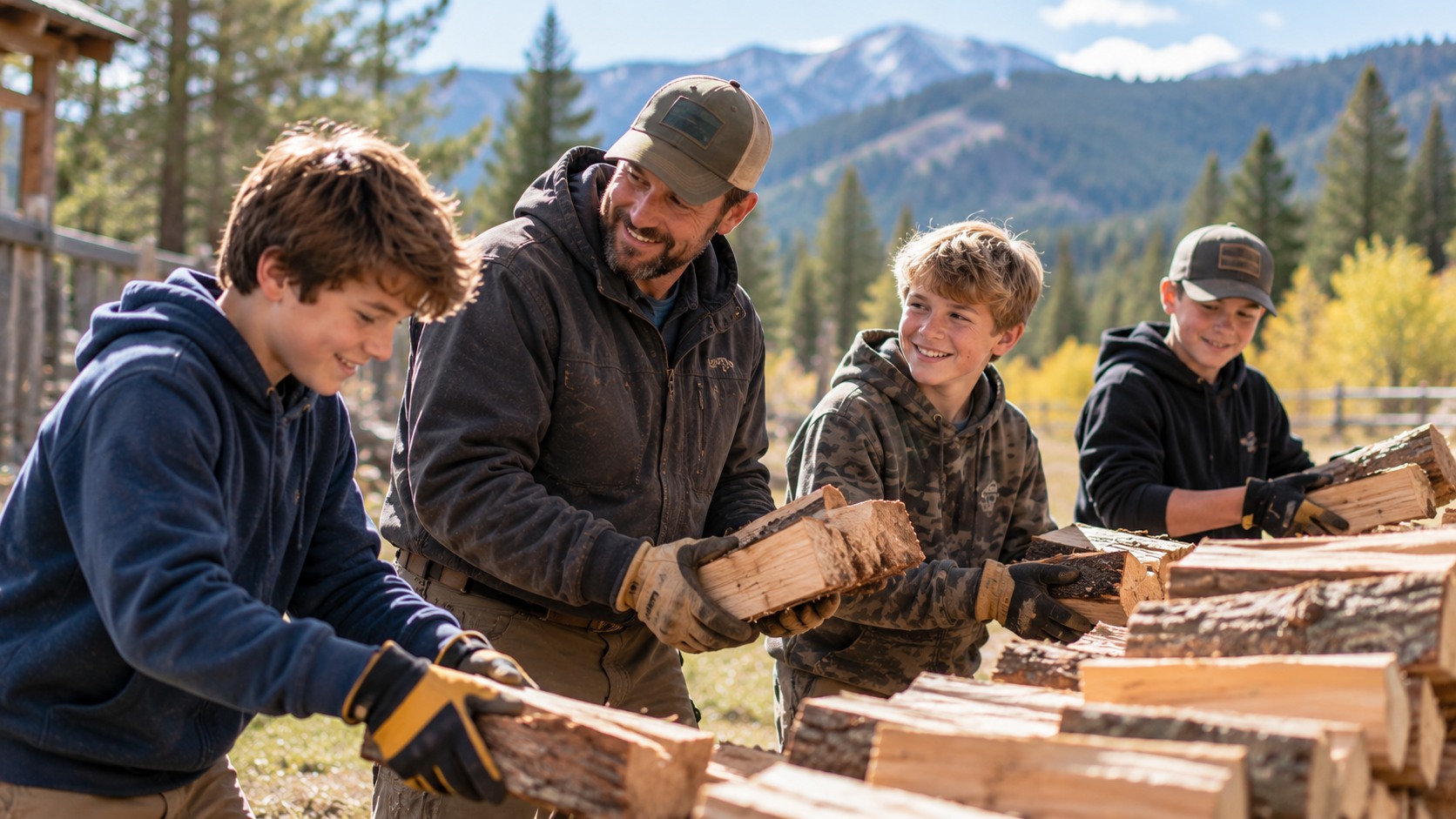
A family-style environment gives boys opportunities to contribute to everyday life.
Shared responsibilities may include caring for personal belongings, helping with household tasks, keeping spaces organized, and participating in age-appropriate practical activities.
These experiences can teach cooperation, problem-solving, and accountability.
The American Academy of Pediatrics' recommendations for age-appropriate chores emphasize that responsibilities can help children build useful life skills and confidence.
At Raising Arrows, practical learning and shared responsibilities complement academics and Biblical mentoring.
The goal is for boys to recognize that their choices and contributions matter within a larger community.
Faith, Recreation, and Community: Growing Beyond the Classroom
Raising Arrows describes Christian faith as the foundation of its home and school environment.
Biblical teaching, prayer, devotionals, and discipleship are integrated into the program's approach to character development.
Faith is also reflected in everyday interactions—how boys are encouraged to treat others, accept responsibility, show respect, and develop a sense of purpose.
Recreation is another important part of the experience.
Outdoor activities and physical exercise provide opportunities for movement, cooperation, and healthy enjoyment of Montana's natural surroundings.
Whether boys are learning together, participating in a group activity, or spending time outdoors, these experiences can create opportunities to practice teamwork and build positive peer relationships.
Evenings: Shared Meals, Relationships, and Rest
In a family-style setting, ordinary moments can be meaningful.
Meals provide opportunities for conversation and connection. Evening routines can include completing responsibilities, preparing for the following day, and winding down.
Consistent adult guidance is especially important during these quieter parts of daily life.
Boys need adults who can explain expectations, listen to concerns, model respectful communication, and provide encouragement when a day has been difficult.
A healthy residential environment should balance supervision and structure with age-appropriate privacy, rest, and opportunities for personal growth.
The Importance of Mentorship
One of the defining features of Raising Arrows' approach is its emphasis on relationships with caring adults.
Mentorship is not limited to formal lessons.
A staff member may encourage a boy through a difficult assignment, help him reflect on a poor decision, or recognize his effort in completing a responsibility.
These everyday interactions provide opportunities to practice communication, accountability, and perseverance.
The aim is to help boys develop skills and character that can continue serving them after their time in the program.
How Families Stay Involved
A residential school does not eliminate the importance of parents and family relationships.
Parents should understand how communication, visits, updates, and transition planning work before enrollment.
Raising Arrows describes family communication and scheduled visits as parts of its program. Specific arrangements should be discussed directly with staff because circumstances can differ.
Its frequently asked questions explain the general admissions process, academics, family involvement, and residential expectations.
A Christian Home and School, Not a Clinical Treatment Facility
It is important to understand what Raising Arrows is designed to provide.
The organization offers a Christ-centered residential and educational environment for boys ages 9–16, emphasizing academics, Biblical guidance, responsibility, and mentoring.
It is not a licensed therapeutic treatment facility.
Families whose sons have significant mental health needs should consult qualified professionals about appropriate care and whether a nonclinical residential school can safely meet their son's needs.
Discovering Whether Raising Arrows Is the Right Fit
Every boy brings his own personality, abilities, experiences, and goals.
For some families, a smaller, structured Christian home and school environment may provide opportunities for academic growth, consistent guidance, and meaningful relationships.
The most important next step is to learn how the program works and determine whether its approach matches your son's individual needs.
Visit the Raising Arrows School for Adopted Boys page to explore its philosophy, academic support, and family-style environment.
A meaningful residential experience is built not only through special activities, but through ordinary days filled with learning, responsibility, encouragement, faith, and opportunities to grow.